
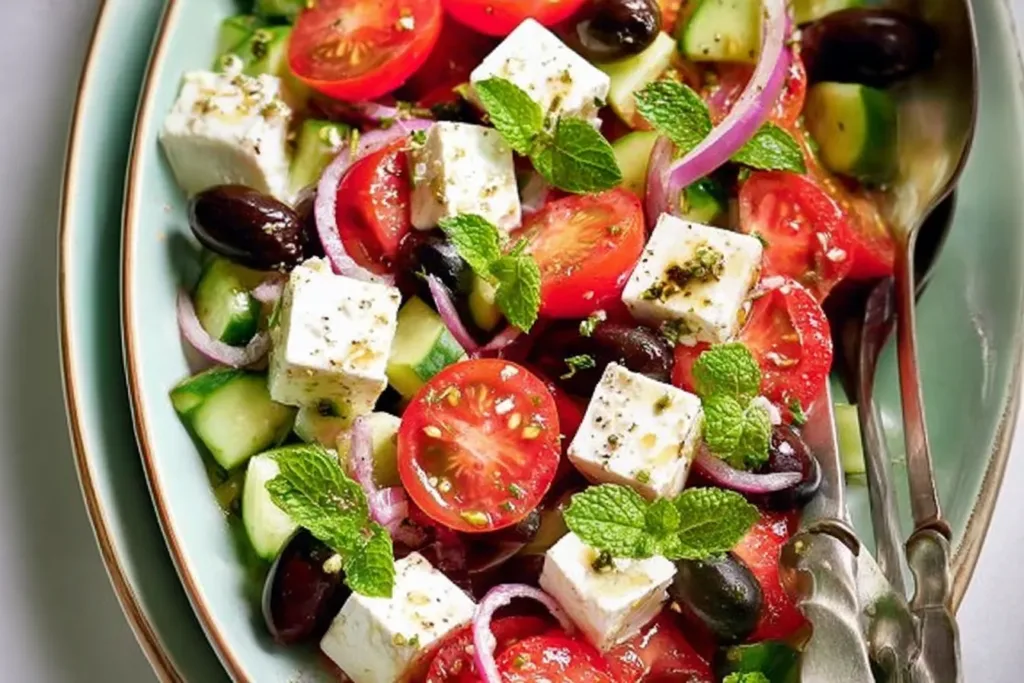
When you think of Mediterranean cuisine, the vibrant flavors of a Greek salad immediately come to mind. This colorful dish, often referred to as a village salad or Horiatiki, is not only visually appealing but also incredibly refreshing. Bursting with fresh vegetables, tangy feta, and zesty olives, it offers a delightful balance of taste and texture that can brighten up any meal.
Additionally, it’s a versatile option, perfect for both casual gatherings and formal dinners. Whether enjoyed on its own or as an accompaniment to grilled dishes, Greek salad tempts the palate while providing a wholesome, nutritious experience. Let’s dive into why this classic Mediterranean salad deserves a special spot on your dining table!
Print
Greek Salad: The Ultimate Refreshing Summer Dish
- Total Time: 50
- Yield: 4 servings 1x
- Diet: Vegetarian
Description
A fresh and vibrant Greek Salad, perfect for a light meal or a side dish, bursting with flavors from feta cheese, olives, and fresh vegetables.
Ingredients
¼ cup extra-virgin olive oil
3 tablespoons red wine vinegar
1 garlic clove minced
½ teaspoon dried oregano
more for sprinkling
¼ teaspoon Dijon mustard
¼ teaspoon sea salt
Freshly ground black pepper
1 English cucumber cut lengthwise seeded and sliced ¼-inch thick
1 green bell pepper chopped into 1-inch pieces
2 cups halved cherry tomatoes
5 ounces feta cheese cut into ½ inch cubes
⅓ cup thinly sliced red onion
⅓ cup pitted Kalamata olives
⅓ cup fresh mint leaves
Instructions
- In a small bowl, whisk together the olive oil, red wine vinegar, minced garlic, dried oregano, Dijon mustard, sea salt, and freshly ground black pepper until emulsified.
- In a large bowl, combine the cucumber, green bell pepper, cherry tomatoes, feta cheese, red onion, Kalamata olives, and fresh mint leaves.
- Drizzle the dressing over the salad and toss gently to combine.
- Sprinkle with additional dried oregano before serving.
Notes
For an extra touch of flavor, let the salad sit for 15 minutes before serving to allow the ingredients to marinate together.
- Prep Time: 20
- Cook Time: 30
- Category: Dessert
- Method: baking
- Cuisine: American
Nutrition
- Serving Size: 1 slice
- Calories: 210 kcal
- Sugar: 4 g
- Sodium: 390 mg
- Fat: 18 g
- Saturated Fat: 5 g
- Unsaturated Fat: 11 g
- Trans Fat: 0 g
- Carbohydrates: 8 g
- Fiber: 2 g
- Protein: 5 g
- Cholesterol: 25 mg
Keywords: Greek Salad, salad recipes, feta cheese, healthy recipes, Mediterranean cuisine
Essential Ingredients for Greek Salad:
To create a delightful Greek salad, gather the following ingredients, all measured precisely for a perfect balance of flavors. Firstly, blend your dressing by whisking together ¼ cup of extra-virgin olive oil, 3 tablespoons of red wine vinegar, 1 minced garlic clove, ½ teaspoon of dried oregano, ¼ teaspoon of Dijon mustard, and ¼ teaspoon of sea salt. Season with freshly ground black pepper to taste.
For the salad base, you will need 1 English cucumber, cut lengthwise, seeded, and sliced into ¼-inch thick pieces. Next, chop 1 green bell pepper into 1-inch pieces and incorporate 2 cups of halved cherry tomatoes. Add richness to your salad with 5 ounces of feta cheese, cut into ½-inch cubes, and ⅓ cup of thinly sliced red onion. For an authentic touch, include ⅓ cup of pitted Kalamata olives and garnish with ⅓ cup of fresh mint leaves.
If you’re interested in adding more vibrant flavors to your meals, try including recipes like the vibrant carrot cucumber spiral salad along with this classic Greek salad. Enjoy the burst of Mediterranean freshness in every bite!
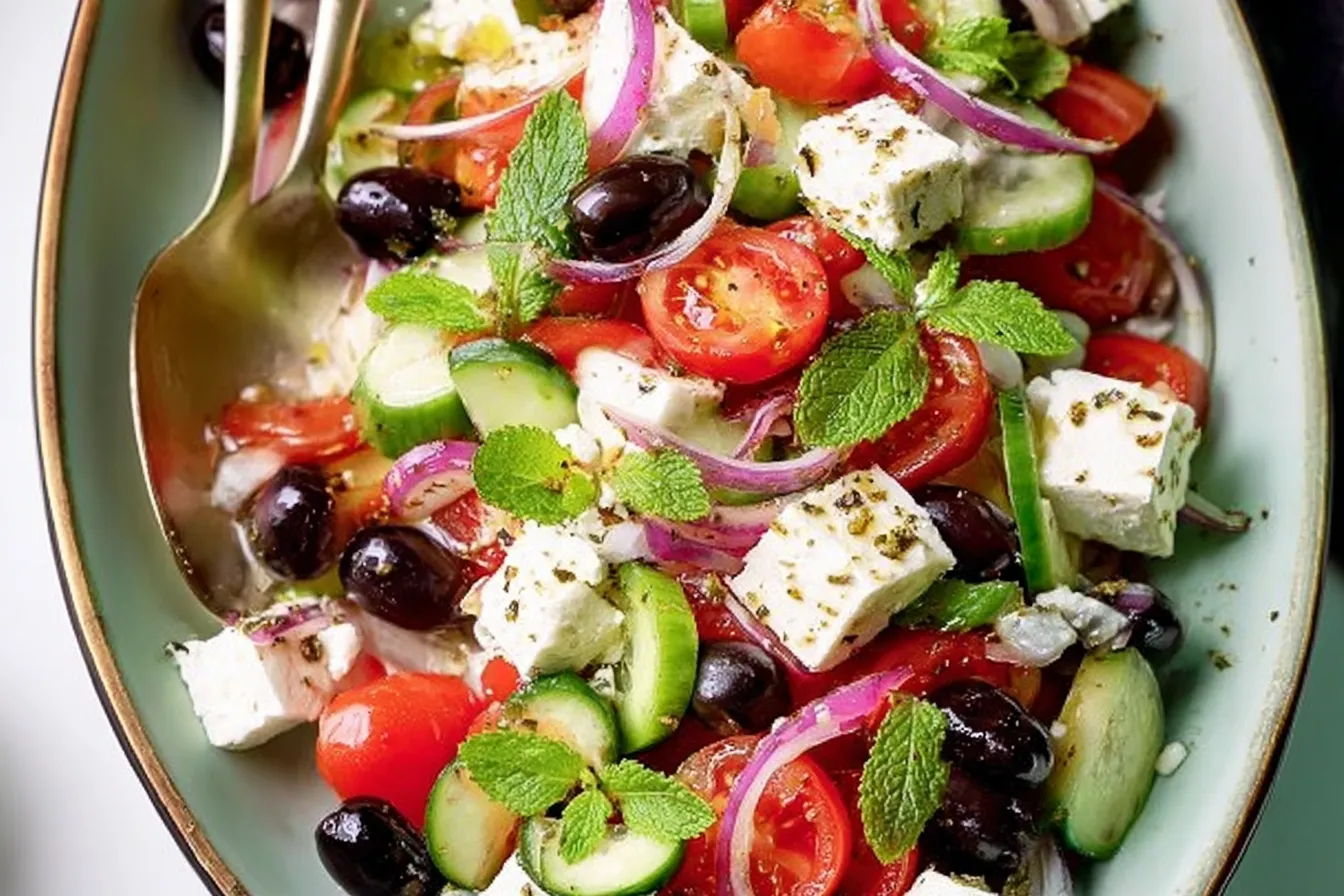
How to Prepare Greek Salad:
Crafting a refreshing Greek salad is an easy and satisfying process. Start by making the dressing; in a bowl, whisk together ¼ cup extra-virgin olive oil, 3 tablespoons red wine vinegar, 1 minced garlic clove, ½ teaspoon dried oregano, ¼ teaspoon Dijon mustard, and ¼ teaspoon sea salt. Season with freshly ground black pepper to taste.
Next, prepare the salad ingredients. Take 1 English cucumber, cut it lengthwise, scoop out the seeds, and slice it into ¼-inch thick pieces. Chop 1 green bell pepper into 1-inch pieces. Halve 2 cups of cherry tomatoes for a burst of flavor. Combine these veggies in a large salad bowl.
To enhance the taste, add 5 ounces of feta cheese (cut into ½-inch cubes), ⅓ cup of thinly sliced red onion, and ⅓ cup of pitted Kalamata olives. Toss in ⅓ cup of fresh mint leaves for a hint of brightness. Drizzle the prepared dressing over the salad, gently toss to combine, and sprinkle more dried oregano on top. This vibrant dish pairs beautifully with other salads, like a refreshing avocado watermelon salad.
Variations:
Exploring different takes on a traditional Greek salad can delight your palate and surprise your guests. One delightful variation is the addition of roasted vegetables, which infuses the dish with a warm, earthy flavor. You can also try a Mediterranean twist by incorporating quinoa or farro, to create a heartier version that’s packed with protein.
For those aware of their nutritional intake, consider a keto avocado egg salad that retains the Mediterranean essence while being low in carbs. Another exciting option is to replace Greek olives with kalamata olives, offering a bolder taste.
For more inspiration, check out this detailed guide on the classic Greek Salad. Each variation presents a unique flavor profile, ensuring that this refreshing dish remains a staple at your table. With these creative adjustments, you’re bound to find your favorite version of this iconic salad.
Health Benefits:
Greek salad is not only a colorful and delicious dish but also a powerhouse of nutrients. Rich in vitamins and minerals, this Mediterranean delight includes fresh ingredients like cucumbers, tomatoes, and bell peppers. The fiber found in these veggies aids digestion, while their antioxidants combat oxidative stress. Additionally, the olives and feta cheese provide healthy fats and calcium, essential for bone health.
The olive oil commonly used in Greek salad can improve heart health due to its monounsaturated fats. These fats help lower bad cholesterol levels. Furthermore, incorporating a mix of fresh herbs enhances the salad’s flavor and provides further health benefits. For those looking for additional salad inspiration, consider trying the Vibrant Carrot Cucumber Spiral Salad. This dish also shares the freshness and health-oriented ingredients characteristic of a traditional Greek salad, making it an excellent addition to a balanced diet. Enjoying Greek salad as part of your meals can help you stay revitalized.
Storage Tips for Greek Salad:
To maintain the freshness and flavor of a classic Greek salad, proper storage is key. After preparation, it’s best to enjoy your Greek salad immediately. However, leftovers can be stored effectively. Place the salad in an airtight container in the refrigerator. This helps preserve its taste and texture for up to two days. Keep dressing separate until ready to serve. This prevents soggy veggies and wilted greens.
If you’re looking for an exciting twist on fresh ingredients, consider trying a garden pasta salad. This offers a delightful variation for those who love Mediterranean flavors. If your Greek salad has diced cucumbers or ripe tomatoes, try to consume these faster, as they have a shorter shelf life. Lastly, avoid freezing Greek salad since this will alter the vegetables’ integrity and taste significantly. Enjoy your vibrant, fresh salad while it’s at its best!
Serving Suggestions for Greek Salad:
Enjoy your Greek Salad as a refreshing side dish for grilled meats or seafood, enhancing the meal’s flavor profile. Additionally, pair it with a light protein like our Tuna and White Bean Dill Salad for a satisfying lunch. This versatile salad can also accompany crusty bread or a hearty wine for a delightful Mediterranean experience.
Frequently Asked Questions (FAQs):
What ingredients are typically in a Greek Salad?
Greek Salad commonly features a medley of fresh ingredients like ripe tomatoes, crisp cucumbers, flavorful olives, and creamy feta cheese. Often enhanced with red onions and bell peppers, this dish brings a delightful crunch complemented by a drizzle of olive oil and a sprinkle of oregano.
Can I make Greek Salad ahead of time?
Absolutely! While a Greek Salad is best enjoyed fresh, you can prepare many of the ingredients ahead of time. Just be sure to combine them shortly before serving to maintain the crispness of the veggies.
Is there a variation to Greek Salad?
Certainly, one popular variation is the Mediterranean Chopped Salad, which includes similar ingredients but adds a variety of herbs and spices to enhance the flavors. For a delightful twist, check out this Garden Pasta Salad that incorporates pasta along with the classic ingredients.
How can I add protein to Greek Salad?
For a protein boost, consider adding grilled chicken, shrimp, or chickpeas. These additions not only make the salad heartier but also complement the vibrant flavors beautifully.
Is Greek Salad healthy?
Yes, Greek Salad is considered quite healthy. It’s packed with vitamins from the fresh vegetables and offers healthy fats from olive oil and feta cheese, making it a nutritious choice.
What dressing is used in Greek Salad?
Typically, Greek Salad is dressed with a simple mixture of olive oil, vinegar, lemon juice, and herbs. This keeps the salad light while enhancing the fresh flavors of the ingredients.